


Moisture Control and Water Addition
VIBRONET® ‐ PATENTED CEREAL DAMPENING SYSTEM FOR DRASTIC TEMPER TIME REDUCTION
+ H2O | patented cereal and pulse dampener for drastic temper time reduction

VIBRONET®

PATENTED CEREAL DAMPENING SYSTEM
FOR DRASTIC TEMPER TIME REDUCTION

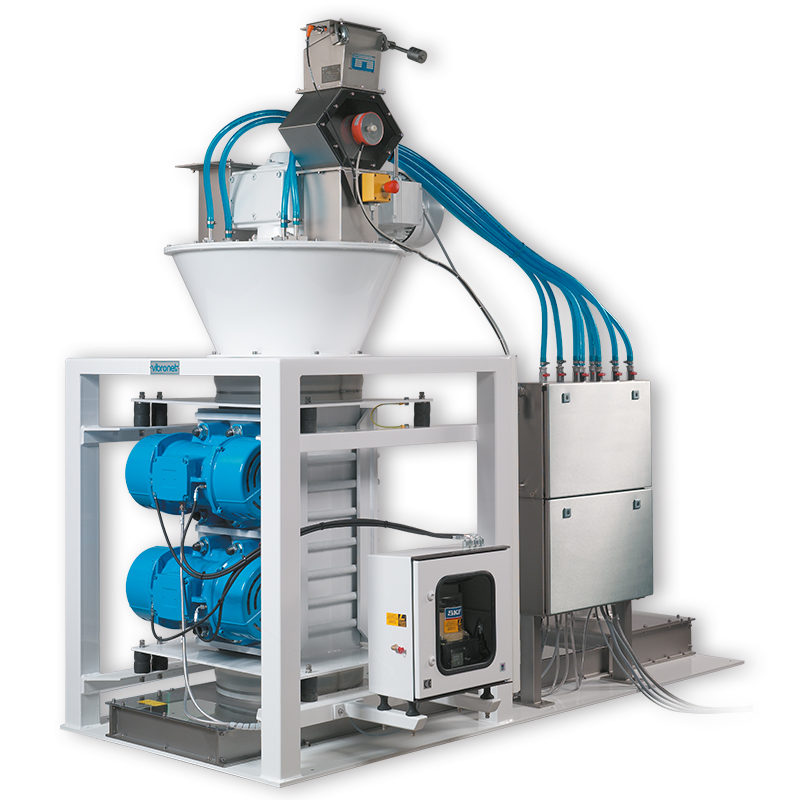
THE END OF TEMPER TIME - The patented vertical cereal and pulses dampening system vibronet® is the only system in the world to drastically reduce temper time, energy consumption, and total bacteria count.

It can add up to 12% of water in one pass. This scientifically proven natural technology ensures an increase in total yield and bright flours. In feed processes, it improves flake quality and increases gelatinization. In corn- and durum wheat milling, it increases the semolina output.


At vibronet® we take time for our customers' questions and wishes. We always provide a thorough consultation, regardless of where our customer is situated worldwide.

Whether it is production optimisation or the development of new products - vibronet® has gained decades of practical experience and knowledge in various industries worldwide which you can and should lucratively use for the success of your company.

Dipl.-Ing. Dieter Otto Gräf
M.Sc. Engineering and Milling
CTO / Company Founder

APPLICATIONS

  • Preparation of cereals (wheat, rye, barley, oats, corn, spelled, malt, etc.)
  • Preparation of pulses (cocoa, coffee, etc.)
  • Before steaming, cooking or Infrared-Micronizing
  • Optimal uniform humidification before flaking
  • Addition of seed treatment or fertilizer, etc.
  • Addition of water-soluble additives: fungicides, insecticides, etc.

ADVANTAGES

  • Drastic temper time reduction: Maximum 2 – 9 hours *
  • Radical reduction of energy consumption:  ± 0.2 kW / ton/ hour only 
  • 12% water addition in one pass through the machine *
  • More hygiene: Less bacterial growth due to low temper time and vertical Clean-Design
  • ± 1.6% more yield on bright flours *
  • ± 1 % more total yield *
  • Uniform water penetration through entire kernel hull due to water film  
  • Uniform wetting even of the kernel crease [≙  of the kernel surface]
  • Optimal separation of hull and endosperm
  • Higher yields on middlings and semolina
  • Addition of water soluble additives and liquids
  • Gentle conditioning: No breakage abrasion
  • Lower construction cost: Less silos and transport elements
  • More flexibility: Easy short-term changes in grain mix
  • No changes in milling diagram or grinding properties
  • Temperature increase of the dampened product in winter times
  • Very low maintenance and wear

* Depending on cereal type and installation

Scientifically proven:
Federal Institute of Research MRI, Detmold, Germany

INSTALLATIONS


VIBRONET® CEREAL DAMPENING SYSTEM | vibronet® Gräf GmbH & Co. KG | Cereal Damping Systems

The vibration dampener vibronet® vertical dampening system to drastically reduce cereal temper time, energy cost and bacteria count to an absolute minimum.

Product Brand: vibronet®

Product In-Stock: https://schema.org/InStock

Editor's Rating:
5

FAQ

What is the vibronet® dampener and what does it do?

The vibronet® is a patented continuous vertical dampener for cereals and pulses. It drastically reduces tempering time, energy costs and total bacteria count to an absolute minimum. The technology enables eco-friendly and energy-efficient preparation of cereals and pulses using any water-soluble liquid.

What are the main components of the vibronet® machine?

The vibronet® continuous dampener consists of two main units: a mechanical part and an electric control cabinet. The mechanical part includes a product inlet, a premixing and water distribution unit, a vibration unit and a product discharge unit. The electric control cabinet is a separate wall-mounted enclosure powered by Siemens, featuring a colour touchscreen with multi-lingual menu-driven operation and tactile keys.

How does vibronet® work — what are the main process steps?

The vibronet® process consists of three steps. First, a premixing device gently blends a metered amount of water with the dry, cleaned product without causing kernel damage or abrasion. Second, the product-water mixture passes continuously through a vibrated channel according to the patented vibronet® principle — high vibration energy breaks the surface tension of water molecules, allowing a water film to cover the entire kernel surface and penetrate fast and evenly. Third, a specially developed discharge device ensures continuous self-emptying of the machine.

Is the science behind vibronet® independently verified?

Yes. All stated performance advantages of vibronet® are scientifically proven. Testing and verification was carried out by the Federal Institute of Research of Safety and Quality of Cereals (MRI), Germany — an independent, authoritative research body in the field of cereal processing.

Which cereals and pulses can be processed with vibronet®?

vibronet® is suitable for a wide range of products. Cereals include wheat, rye, barley, oats, corn, spelt and malt. Pulses and other products include chickpeas, cocoa and coffee. The machine is also used prior to steaming, cooking or Infrared-Micronizing, and for optimal uniform humidification before flaking.

Can additives be added alongside water in the vibronet®?

Yes. vibronet® supports the addition of any water-soluble liquid alongside water. This includes fungicides, insecticides, seed treatment products and fertilizers. The water addition quantity is fully customizable to customer requirements.

How much does vibronet® reduce tempering time compared to conventional dampeners?

vibronet® reduces tempering time to a maximum of 2–9 hours, depending on cereal or pulse type, hardness and installation. Conventional dampeners typically require 12–72 hours for the same task — meaning vibronet® can reduce tempering time by up to 90%. This has been scientifically proven by the Federal Institute of Research of Safety and Quality of Cereals (MRI), Germany.

How much water can vibronet® add in a single pass through the machine?

vibronet® can add up to 12% water in a single pass through the machine. Results depend on cereal or pulse type, hardness and installation. The exact water addition quantity is customizable to customer requirements.

What yield improvements can be expected with vibronet®?

vibronet® delivers approximately ±1.6% more yield on bright (white) flours and approximately ±1% more total yield. Additionally, higher yields on middlings and semolina can be achieved due to optimal hull and endosperm separation. Conventional dampeners offer no yield increase. All figures are scientifically proven and may vary according to product type and installation.

How does vibronet® achieve uniform water penetration across the entire kernel?

High vibration energy breaks the surface tension of water molecules, allowing a water film to form and cover the entire outer hull of each kernel. This ensures fast and even penetration across the full surface. Crucially, vibronet® also achieves uniform wetting of the kernel crease — a recessed area that accounts for approximately one sixth of the total kernel surface and is notoriously difficult to treat uniformly with conventional dampeners.

Does vibronet® improve the separation of hull and endosperm?

Yes. Due to uniform and thorough water penetration of the entire kernel surface — including the crease — vibronet® enables optimal separation of hull and endosperm. This directly contributes to higher yields on middlings and semolina during the milling process.

Does vibronet® cause kernel damage or abrasion during processing?

No. vibronet® is designed for gentle conditioning. The premixing stage carefully blends water and grain without mechanical stress, and no breakage or abrasion occurs during processing. This gentle treatment preserves kernel integrity throughout the dampening process.

How energy-efficient is vibronet® compared to conventional dampeners?

vibronet® consumes only approximately ±0.2 kW per ton per hour of actual power. For a 300 TPD flour mill as a reference example, this results in approximately 21,600 kWh per year at an estimated cost of €4,320 (at €0.20/kWh). By comparison, conventional dampeners consume approximately 11 kW/h, resulting in around 95,040 kWh per year at an estimated cost of €19,008 — meaning vibronet® saves over €14,600 per year in energy costs alone in this scenario. All cost figures are based on assumed market rates.

What are the maintenance and wear costs for vibronet®?

vibronet® is designed for very low maintenance and wear. Annual wear parts costs are approximately €370, compared to approximately €3,600 for conventional dampeners — a saving of approximately 90% in wear-related costs. All figures are based on assumed market rates and may vary.

Does vibronet® improve hygiene in the milling process?

Yes. vibronet® improves hygiene in two ways: the significantly shorter tempering time (2–9 hours vs. 12–72 hours) leaves far less time for bacterial growth in the conditioned grain. Additionally, the vertical clean-design of the machine is self-cleaning, unlike conventional horizontal or inclined dampeners that are not self-cleaning and tend to accumulate product residue, leading to higher bacteria counts.

Does vibronet® work effectively in winter or cold ambient conditions?

Yes. The vibronet® dampening process results in a temperature increase of the dampened product. This is particularly beneficial in winter conditions where incoming grain may be very cold, as the process naturally warms the product during treatment without requiring additional heating equipment.

How quickly can the product mix be changed with vibronet®?

vibronet® allows for quick short-term changes in grain mix, giving mills significantly more operational flexibility. With conventional dampeners, a mix change typically requires waiting approximately 24 hours for the existing product to clear the system. vibronet®'s shorter tempering cycle and continuous self-emptying discharge device make rapid product changeovers possible.

Does installing vibronet® require changes to the existing milling diagram or grinding setup?

No. vibronet® requires no changes to the milling diagram or grinding properties. It integrates into existing processes without modification. Fewer silo bins and transport elements are also needed due to the drastically shorter tempering time, which results in lower construction and investment costs.

Does vibronet® reduce the number of silos and transport elements needed?

Yes. Because vibronet® reduces tempering time from up to 72 hours to a maximum of 9 hours, far less buffer storage capacity is required. This directly reduces the number of silo bins and transport elements needed in the mill layout, resulting in lower construction costs and a smaller infrastructure footprint compared to conventional dampening systems.

What machine models and throughput capacities does vibronet® offer?

vibronet® is available in six models based on dry, cleaned wheat throughput: V5 (max. 5 t/h), V10 (max. 10 t/h), V15 (max. 15 t/h), V25 (max. 25 t/h), V40 (max. 40 t/h) and V60 (max. 60 t/h). Actual capacities may vary depending on product type and installation. Technical data is subject to modification.

What are the physical dimensions and weights of the vibronet® models?

Machine dimensions (L x W x H) and weights by model: V5 — 1,438 x 720 x 1,595 mm, approx. 550 kg; V10 — 1,750 x 720 x 1,613 mm, approx. 610 kg; V15 — 2,100 x 918 x 1,763 mm, approx. 870 kg; V25 — 2,100 x 918 x 2,058 mm, approx. 1,040 kg; V40 — 2,370 x 1,225 x 2,186 mm, approx. 1,560 kg; V60 — 3,150 x 1,225 x 2,226 mm, approx. 1,770 kg. The control cabinet measures 800 x 300 x 1,000 mm for V5–V40 and 1,000 x 300 x 1,200 mm for V60, and weighs approximately 70 kg across all models. All data is subject to modification.

What motors are installed in the vibronet® and what are their power ratings?

Each vibronet® contains three motor types. The premixer motor is 2.2 kW on V5 and V10, 5.5 kW on V15 and V25, and 7.5 kW on V40 and V60. The vibration motor(s): V5 uses one 0.65 kW motor; V10 uses two 0.65 kW motors; V15 uses one 1.8 kW motor; V25 uses two 1.8 kW motors; V40 and V60 each use two 2.5 kW motors. The discharge motor is 0.55 kW on all models except the V60, which uses a 1.5 kW motor. Total connected load ranges from 4.2 kW / 9.2 A (V5) to 17 kW / 32.2 A (V60).

What are the electrical requirements for vibronet®?

The standard operating voltage follows the European CE standard: 380–480 V, 50/60 Hz, three-phase (L1/L2/L3/PE). Custom voltage and frequency configurations are available according to customer or local specifications. The control circuit operates at 24 VDC. The standard cable between machine and control cabinet is 5 metres; longer cables are available on request. The machine arrives pre-cabled with cables fixed to the mechanical part and fitted with connectors at the electric cabinet end.

What water quality and pressure are required for vibronet®?

Water must be constant and without pressure fluctuations, filtered and free of impurities. Hot water is not permitted — only cold water or water with soluble additives may be used. A minimum water filter of 90 µm must be installed directly in front of the machine's water distribution cabinet entry. Minimum operating pressure at the water distribution cabinet entry varies by model: 2.5–4 bar for V5 to V15, 4–5 bar for V25, and 5–6 bar for V40 and V60. Water addition quantity is fully customizable, with the connection size determined by the required litres per hour.

What compressed air supply does vibronet® require?

Compressed air must be constant and free of oil, fat and water. A minimum flow of 200–300 l/min is required. The maximum permitted pressure is 8 bar for all models. Minimum operating pressure ranges from 3–4 bar for V5 and V10, to 4–6 bar for V15 through V60. The air connection is at the machine water distribution unit using an 8 mm OD fitting.

What materials are used in the construction of vibronet®?

The main machine body is constructed in carbon steel, painted RAL9003 high gloss white. All product-contact areas — specifically the product inlet and discharge — are made of stainless steel to meet food-grade hygiene requirements. The control cabinet is sheet steel, also painted RAL9003, designed for wall mounting.

What does the vibronet® control panel offer in terms of operation?

The control panel is a wall-mounted sheet steel cabinet painted RAL9003. It is powered by Siemens components and features a colour touchscreen with a menu-driven, multi-lingual interface and physical tactile keys for reliable operation. This enables intuitive adjustment of process parameters without the need for specialist programming knowledge.

Who manufactures vibronet® and where is it available?

vibronet® is manufactured and distributed globally by vibronet®-Gräf GmbH & Co. KG Cereal Damping Systems, based in Germany. The company is the sole manufacturer and global distributor of the vibronet® system. The product is made in Germany and carries CE certification under the European standard.

How can I contact vibronet®-Gräf GmbH & Co. KG?

vibronet®-Gräf GmbH & Co. KG Cereal Damping Systems is located at Neumühle 1, 35633 Lahnau, Germany. You can contact them by phone at +49 6441 62031, by email at info@vibronet.com, or visit their website at vibronet.com for further information and enquiries.
© 1992 - 2026 All rights reserved.